
Surgical Intervention: Understanding the Nuances of Complex Extractions
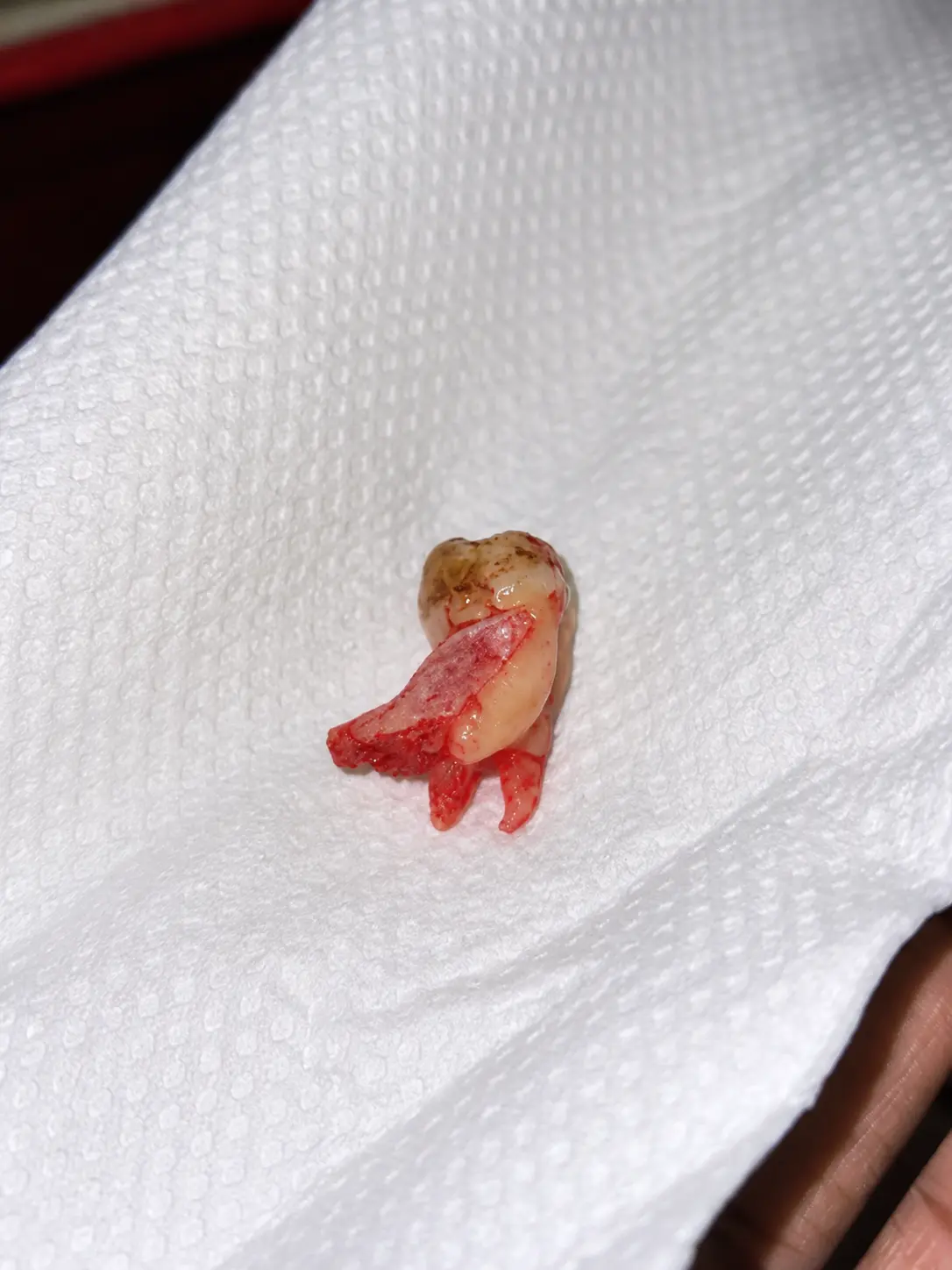
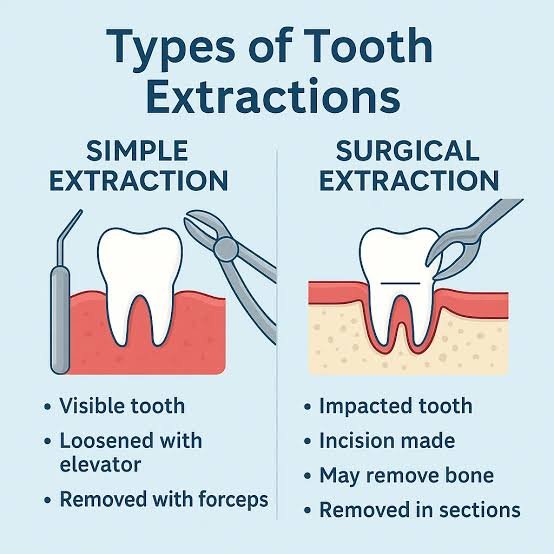
A common misconception in dentistry is that all tooth removals are straightforward procedures that rely solely on simple pressure and dental forceps. While simple extractions are suitable for fully visible, straight-rooted teeth, complex surgical extractions are highly specialized surgical procedures. When a tooth is severely broken down, fused to the bone, or impacted beneath the gums, removing it safely requires precise incision planning, conservative bone removal, and professional tooth sectioning.
At V.I.P Dental Care, Varanasi, we do not view tooth extraction as a casual procedure. Instead, we approach it as a precise, tooth-preserving surgical intervention. Led by Dr. V.R. Mishra, B.D.S., M.U.H.S. (Mumbai), our surgical extractions are planned with great care to minimize trauma to the surrounding bone and soft tissues, support rapid healing, and preserve your jaw structure for future implant restorations. This advanced surgical care is available across our modern clinics in Sigra, Kamachha, and Shivpur.
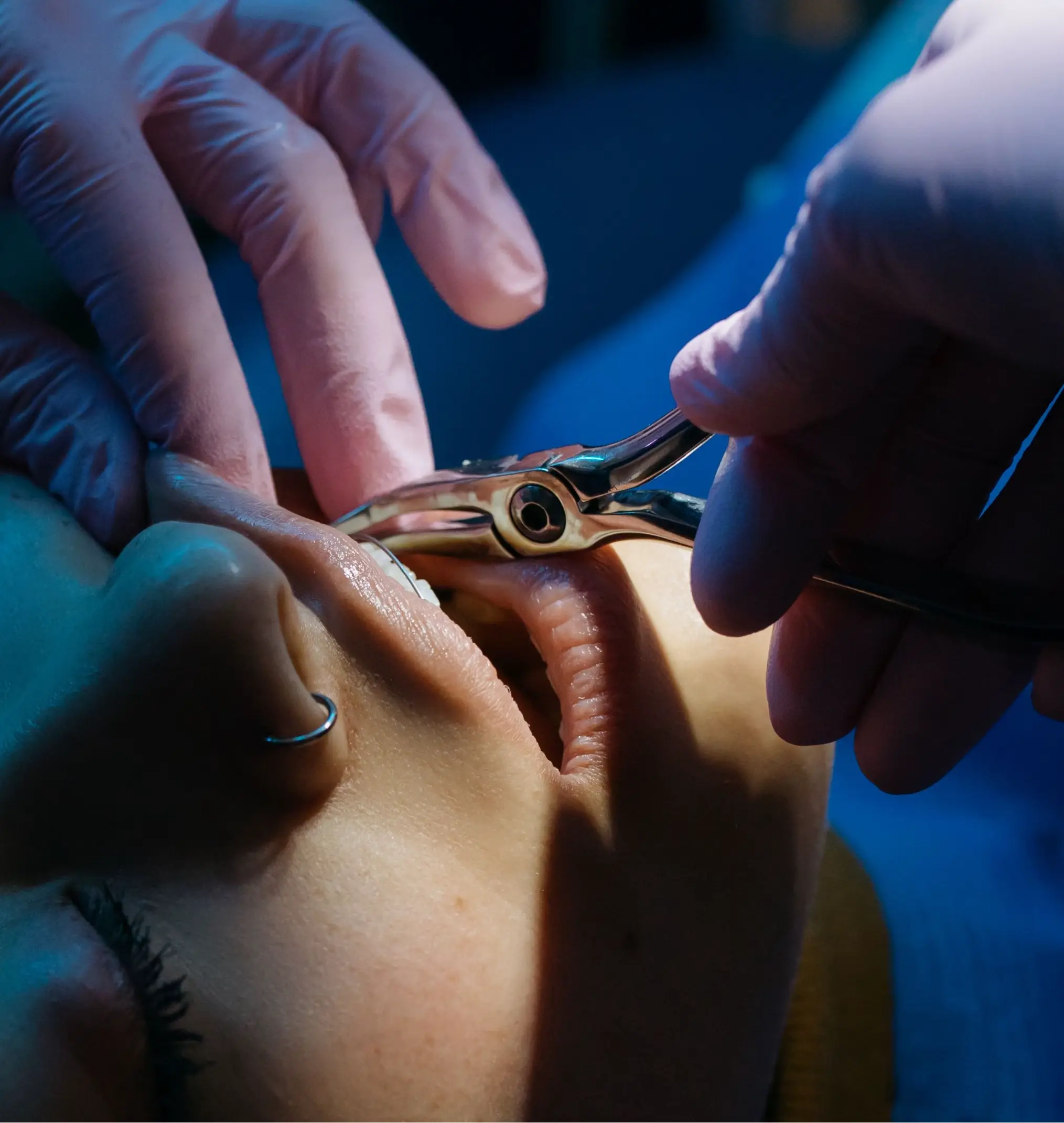
1. Clinical Indications for Complex and Surgical Extractions
Our primary goal is always to save and restore your natural teeth. However, when a tooth is severely damaged or compromised, a complex surgical extraction may be the most appropriate option to protect your overall health. Common indications include:
- Severely Broken-Down or Fractured Teeth: Teeth that have fractured below the gumline or have been deeply destroyed by decay, leaving no stable structure to support a crown or restorative treatment.
- Impacted Wisdom Teeth (Third Molars): Teeth that are trapped beneath the gums or jawbone, often growing at abnormal angles (mesioangular, horizontal, or distoangular). These impactions can cause recurrent infections (pericoronitis), damage neighboring roots, or lead to cyst development.
- Retained or Fractured Roots: Roots that have broken off during previous extraction attempts or have been left behind from extensive decay, requiring careful surgical removal to prevent bone infections.
- Ankylosed Teeth: Teeth that have fused directly to the surrounding jawbone, lacking the natural periodontal ligament space. These require meticulous separation during extraction to prevent bone damage.
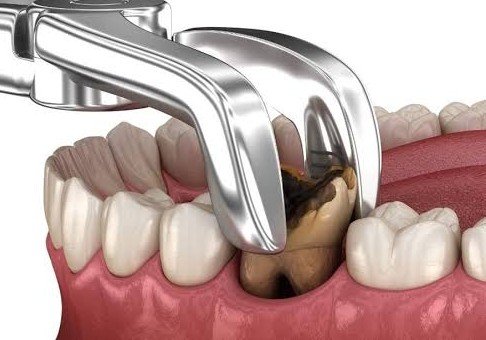
2. Advanced Radiographic Diagnostics: Planning with Precision
Performing a complex extraction safely requires detailed, advanced planning. Before any procedure, we conduct comprehensive radiographic evaluations to evaluate the tooth’s internal anatomy.
We use panoramic Orthopantomograms (OPGs) to evaluate root shapes, identify curved or bulbous (hypercementosis) roots, and locate nearby vital structures. For highly complex or impacted cases, we utilize 3D Cone Beam Computed Tomography (CBCT) to map the tooth with high precision. This allows us to locate the exact position of major facial nerves, such as the inferior alveolar nerve in the lower jaw, or evaluate the proximity of roots to the maxillary sinus floor in the upper jaw, ensuring a safe and comfortable treatment.
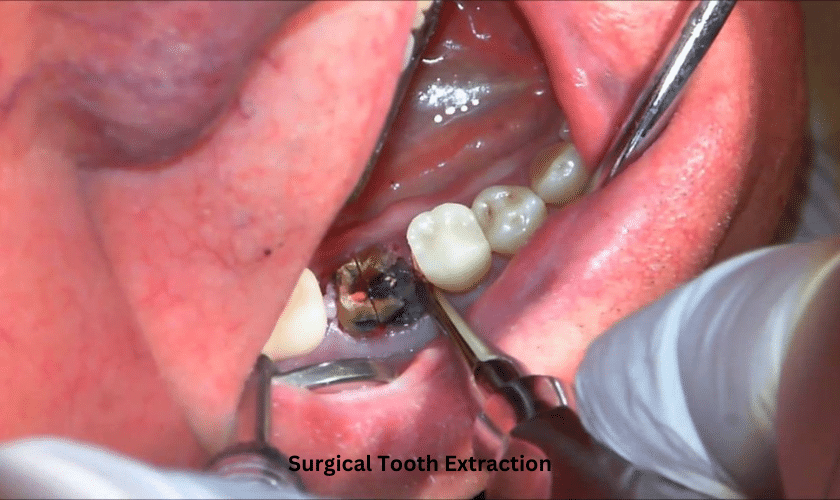
3. Step-by-Step Clinical Protocol: Atraumic Surgical Extraction
To ensure the safest, most comfortable, and tooth-preserving experience, Dr. Mishra uses a highly controlled, systematic clinical workflow:
Phase 1: Deep Local Anesthesia
We use specialized local anesthetics and targeted nerve blocks to ensure the treatment area is completely numb, guaranteeing a comfortable and pain-free experience throughout the procedure.
Phase 2: Conservative Soft Tissue Flap
We create a precise, gentle soft tissue incision to expose the underlying bone and tooth. This controlled approach prevents tissue tearing and supports fast, comfortable post-operative healing.
Phase 3: Ultra-Conservative Bone Guttering
If the tooth is trapped under the jawbone, we use specialized surgical instruments with continuous cooling sterile water to remove a microscopic window of bone, exposing the root structure safely.
Phase 4: Precise Tooth Sectioning (Odontosection)
For multi-rooted or impacted teeth, we segment the tooth into smaller, manageable pieces. This technique allows us to elevate each piece out individually with minimal force, fully preserving the surrounding bone structure.
Phase 5: Socket Debridement & biocompatible Suturing
We thoroughly clean the extraction socket, removing any infected or pathological tissue. We then smooth the remaining bone edges and close the incision with premium, biocompatible sutures to support clean healing.
4. Socket Preservation: Preparing the Foundation for Future Implants
Following a tooth extraction, a natural biological process begins in your jawbone. Without the tooth's root to stimulate the bone, the surrounding jaw structure naturally begins to resorb or shrink. Studies show that up to 40% of the bone height and width at the extraction site can be lost within the first year.
If you plan to replace your tooth with a dental implant in the future, maintaining this bone structure is absolutely crucial. To prevent bone resorption, we can perform socket preservation at the time of extraction.
We place high-quality bone graft material directly into the fresh socket and cover it with a protective membrane. This graft serves as a supportive scaffold, encouraging your body to naturally regenerate new bone tissue. Socket preservation maintains the healthy bone dimensions needed to support a dental implant, ensuring stable, long-lasting, and highly aesthetic results.
5. Post-Operative Healing and Complication Prevention
Your recovery and comfort after surgery are very important to us. Following our detailed post-operative instructions will help support a fast, comfortable healing process and prevent common complications:
Clot Protection (Dry Socket Prevention): After extraction, a protective blood clot forms in the socket. To protect this clot, avoid smoking, drinking through a straw, or spitting forcefully for the first 48 hours, as these actions can dislodge the clot and lead to a painful condition known as dry socket.
Managing Swelling: Minor swelling is a normal part of the body's healing response. Applying a cold compress or an ice pack wrapped in a towel to the outside of your cheek for 15-minute intervals during the first day can help reduce swelling and keep you comfortable.
Medication Compliance: Be sure to take all prescribed medications exactly as directed, including any pain relievers or antibiotics. This keeps you comfortable and helps prevent post-surgical infections.
Dietary Adjustments: Stick to soft, cool, or room-temperature foods for the first few days. Avoid hot, spicy, or crunchy foods that can irritate the healing gum tissue.
Trust Varanasi's Specialized Trauma Center
Complex and surgical extractions require advanced expertise, thorough planning, and a dedicated, sterile environment. With low-radiation digital radiography, OPG technology, and experienced surgical methods, our clinics are equipped to provide the precise, high-quality care needed to support your health.
Take a proactive step for your health. Complete our scheduling form below to request a surgical consultation with Dr. V.R. Mishra.