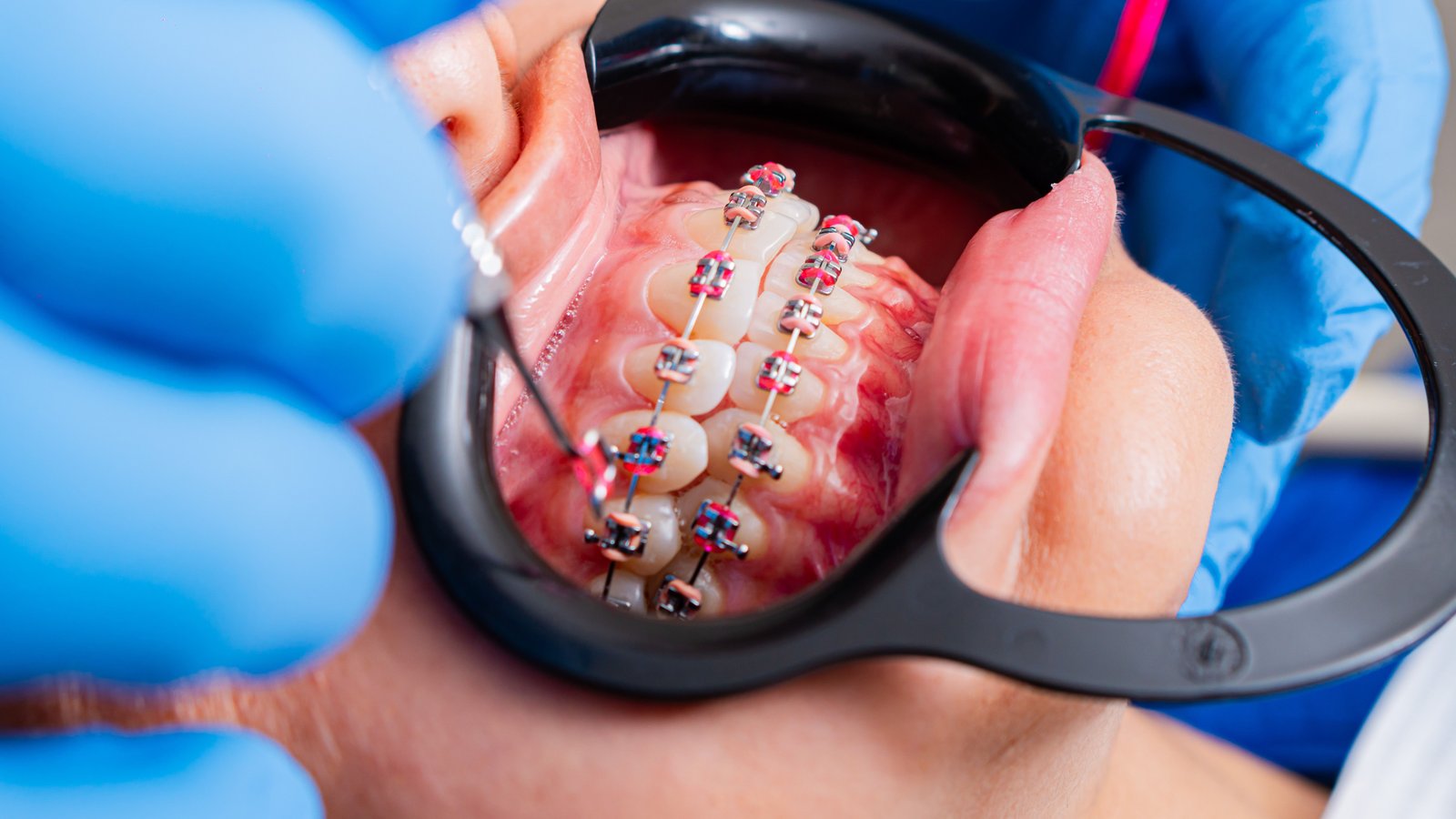
The Orthodontic Principles: More Than Just a Symmetrical Smile
A beautifully aligned smile is a powerful asset, but orthodontic treatment is much more than a cosmetic choice. Teeth that are crowded, crooked, or severely overlapping present significant functional and hygiene challenges. Tight, misaligned spaces are extremely difficult to clean effectively, making plaque biofilm accumulate easily and increasing your risk of decay and gum inflammation. Over time, an uneven bite can also cause abnormal tooth wear, chewing difficulties, and chronic strain on your temporomandibular joints (TMJ), potentially leading to facial muscle pain and headaches.
At V.I.P Dental Care, Varanasi, under the direction of Dr. V.R. Mishra, B.D.S., M.U.H.S. (Mumbai), we view orthodontic alignment as an essential part of long-term wellness. Across our modern locations in Sigra, Kamachha, and Shivpur, we combine advanced digital diagnostics with proven orthodontic techniques—including traditional metal brackets and highly discreet clear ceramic braces—to align your smile safely and comfortably.
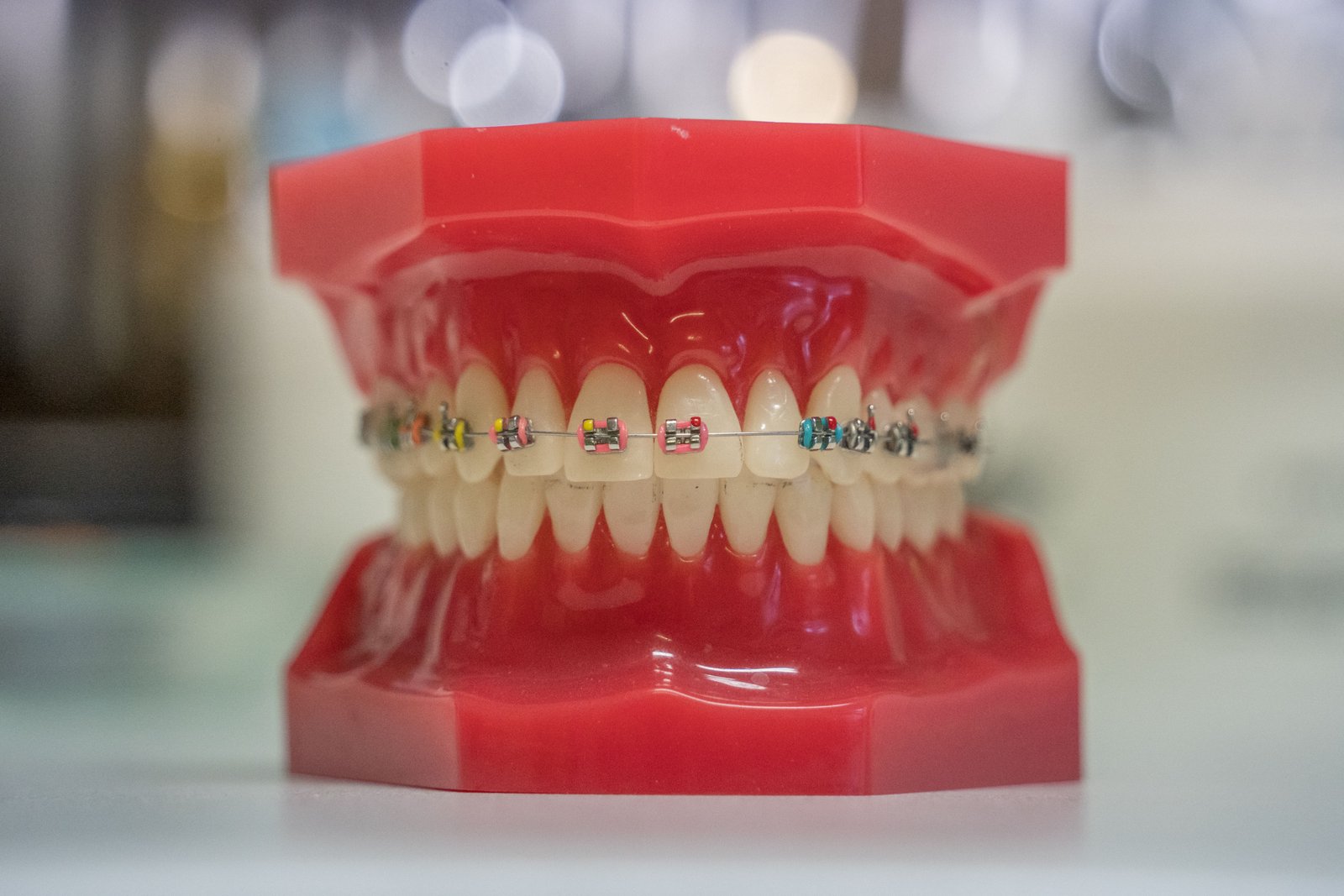
1. The Biomechanics of Tooth Movement: How Braces Work
Orthodontic treatment relies on your body's natural bone-remodeling capabilities. Teeth are not fixed permanently in your jawbone; instead, they are held in place by a flexible suspension system of tissue fibers called the periodontal ligament (PDL).
When braces apply constant, gentle pressure to a tooth, it creates a compression zone on one side of the root and a tension zone on the other. On the compressed side, the pressure stimulates osteoclasts—specialized cells that safely break down small amounts of bone tissue to make room for movement. On the tension side, where the fibers are stretched, the force stimulates osteoblasts to deposit new bone matrix, securing the tooth in its new position.
Maintaining constant, gentle forces is essential. Applying excessive pressure can damage the root structures or compromise the vital nerves inside the teeth. Our precise bracket setups and highly flexible archwires are designed to apply gentle, balanced forces, ensuring a safe, comfortable, and highly predictable alignment process.
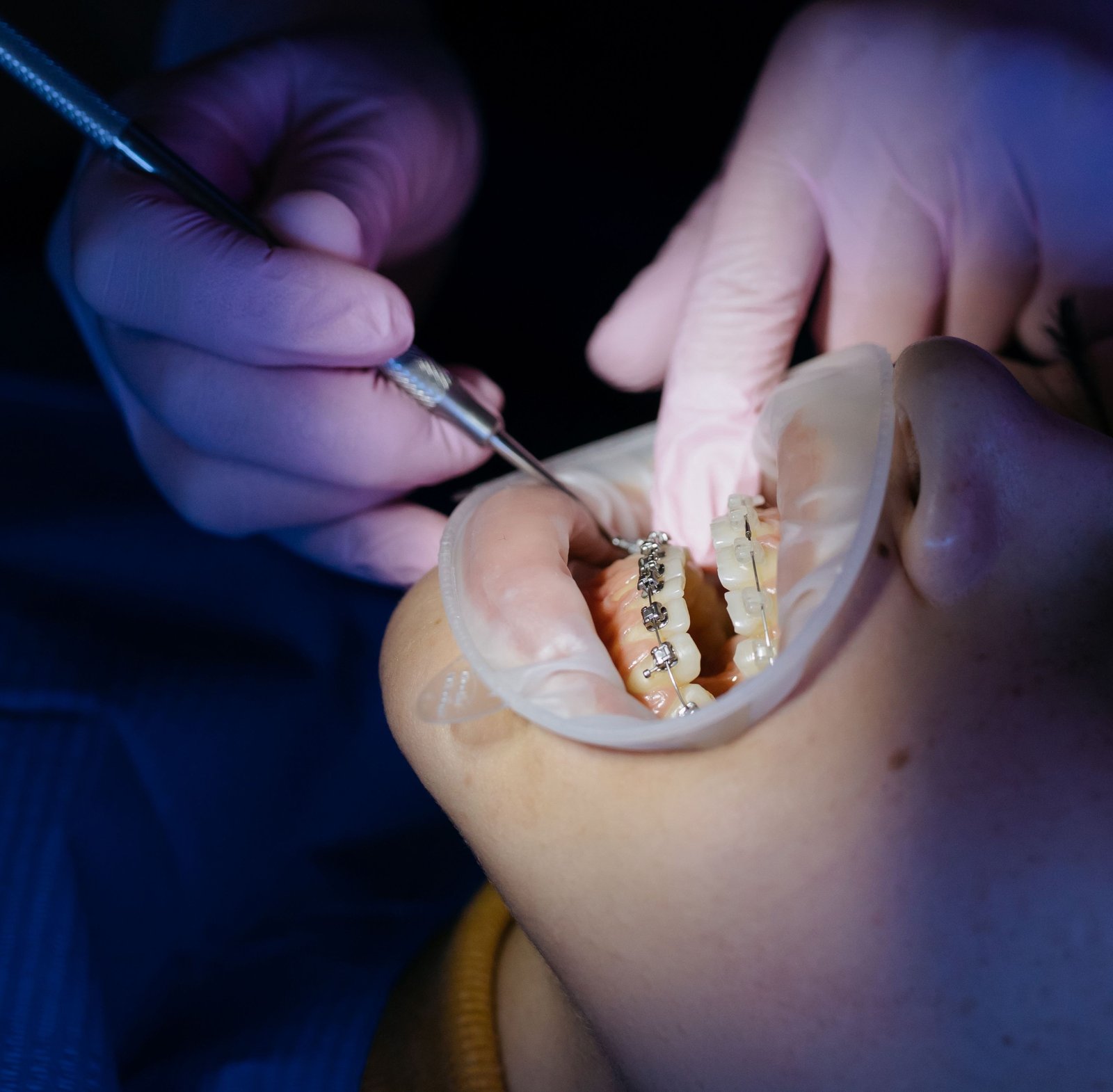
2. Traditional Metal Braces: The Biomechanical Powerhouse
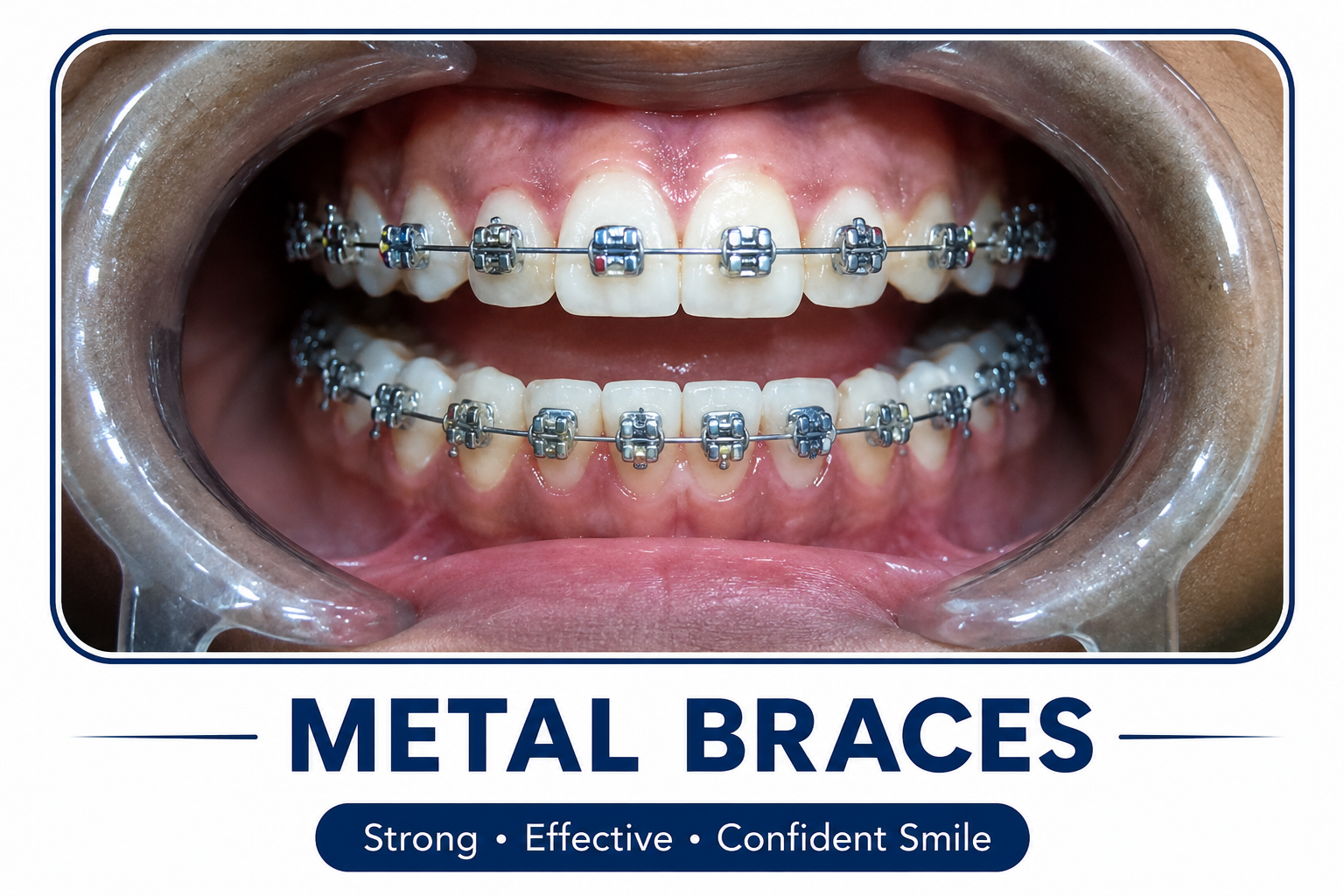
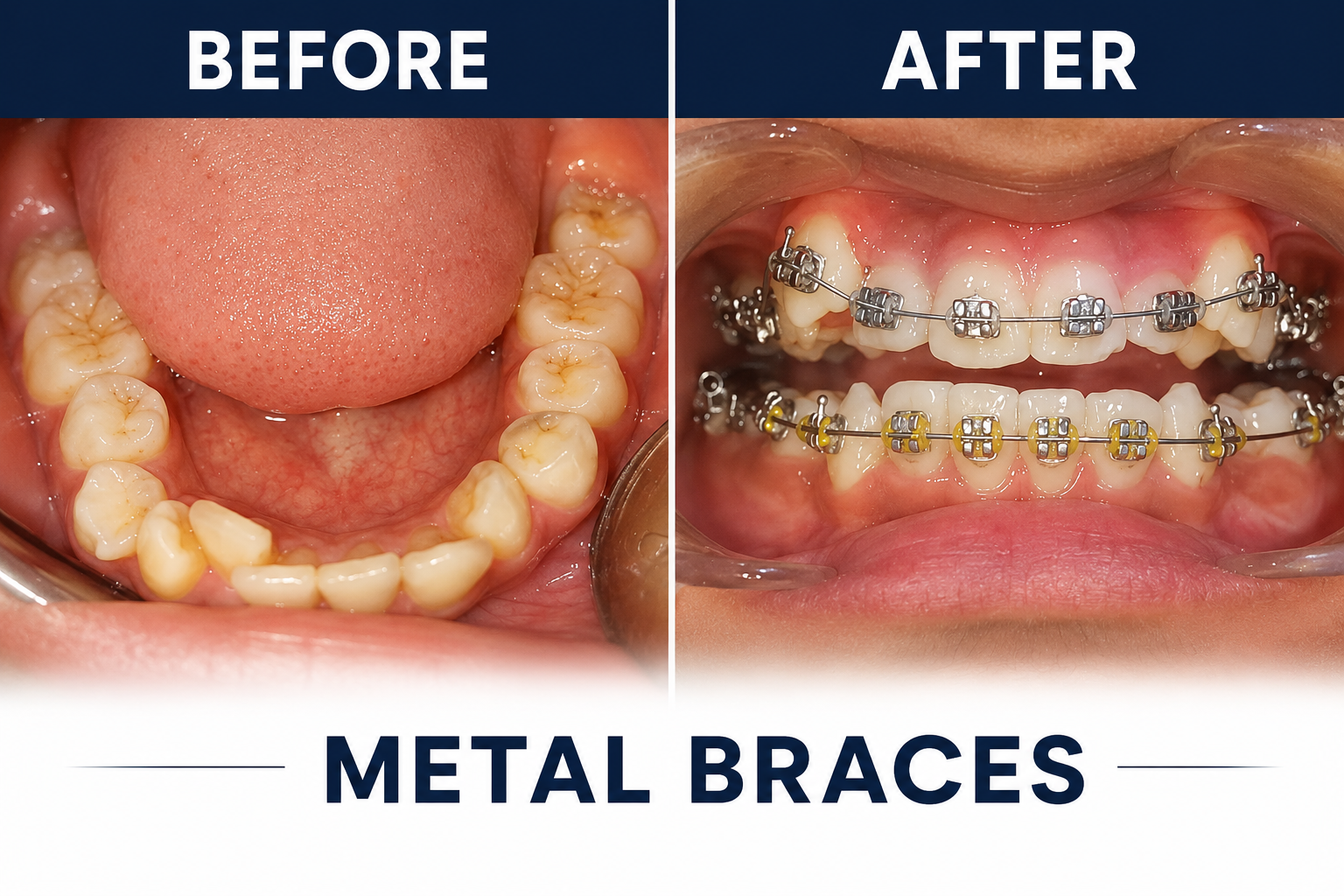
Traditional metal braces remain the most widely used and reliable system in orthodontic history. Made of high-grade stainless steel or titanium, these braces consist of small, durable brackets bonded to the front of each tooth, connected by a flexible metallic archwire that guides tooth movement.
Because of their outstanding strength and durability, metal braces are highly effective at treating even the most complex orthodontic concerns. They are particularly well-suited for resolving severe crowding, closing large gaps, treating deep overbites or underbites, and correcting skeletal jaw misalignments.
Additionally, modern metal brackets are smaller, lower-profile, and far more comfortable than older designs, reducing potential irritation to your lips and cheeks. They are also a highly popular choice for pediatric and teenage patients, who can customize their braces with a wide variety of colorful elastic bands.
3. Clear Ceramic Braces: Subtle and Aesthetic Alignment
For adult professionals or teenagers seeking a more discreet treatment option, clear ceramic braces offer a highly aesthetic alternative. These braces use advanced polycrystalline or monocrystalline sapphire brackets designed to match the natural shade and translucency of your tooth enamel.
When paired with tooth-colored or aesthetic-coated archwires, ceramic braces are virtually unnoticeable from a distance, allowing you to undergo complete orthodontic treatment with confidence. Our advanced ceramic brackets are also highly resistant to staining from coffee, tea, or food pigments, maintaining their bright, clear look throughout your treatment.
While ceramic brackets are slightly larger and require careful care compared to metal braces, they provide the exact same level of physical control and teeth-aligning power, ensuring beautiful, natural results without compromising on aesthetics.
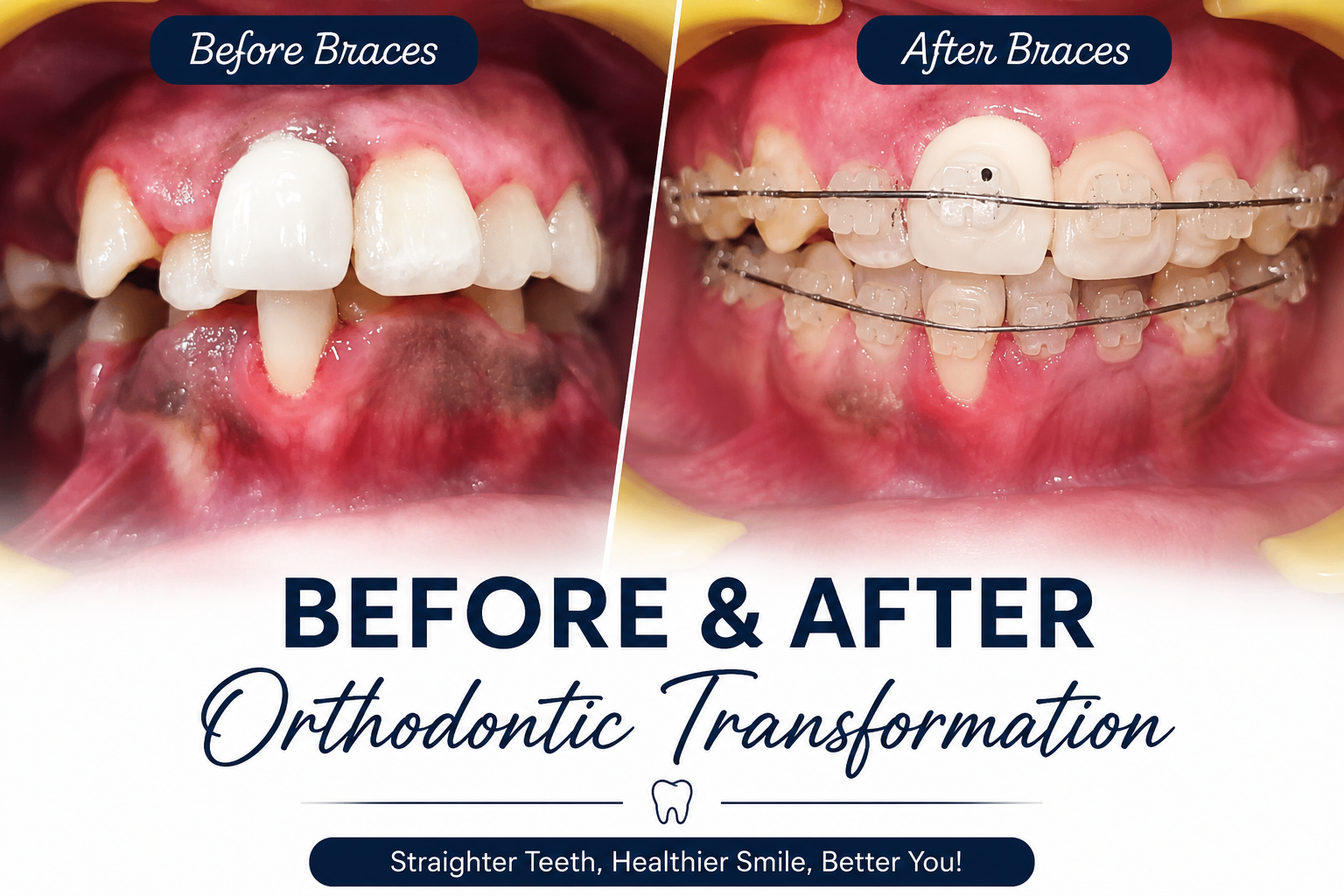

4. Your Orthodontic Journey: Step-by-Step Clinical Workflow
At V.I.P Dental Care, aligning your smile with braces is a careful, highly coordinated clinical process completed over several key stages:
Phase 1: Comprehensive Diagnostics: We begin with a detailed physical exam, low-radiation panoramic OPG scans, lateral cephalometric X-rays, clinical photography, and precise study models to plan your tooth movements with high accuracy.
Phase 2: Enamel Preparation & Bonding: We clean and condition your tooth enamel, apply a specialized, medical-grade adhesive, and place the metal or ceramic brackets precisely on your teeth.
Phase 3: Archwire Insertion: We place the initial, highly flexible nickel-titanium (NiTi) archwire inside the bracket slots and secure it with clear, white, or colorful elastic ligatures to begin alignment.
Phase 4: Regular Adjustments (Every 4-6 Weeks): We perform routine adjustments to replace worn elastics, check your progress, and gradually transition to stronger archwires to guide your teeth safely.
Phase 5: Debonding and Retention: Once alignment is complete, we gently remove the brackets, polish your enamel, and create custom fixed or removable retainers to keep your teeth in their beautiful, new positions.
5. Oral Hygiene and Diet with Braces: Protecting Your Enamel
While wearing braces, maintaining excellent oral hygiene is incredibly important. Bracket wings and archwires create areas where plaque biofilm can easily accumulate. If plaque is not removed, it can lead to gum inflammation (gingivitis) or decalcification—the permanent white spots that can form around brackets on enamel.
To protect your teeth, we recommend brushing after every meal, using specialized interdental brushes, flossing with a threader, or using a water flosser. It is also important to adjust your diet slightly. We advise avoiding hard, sticky, or very sugary foods—such as chewing gum, hard candies, popcorn, or whole apples—which can damage brackets, distort archwires, and lengthen your treatment timeline.
Prioritize Your Symmetrical Smile Today
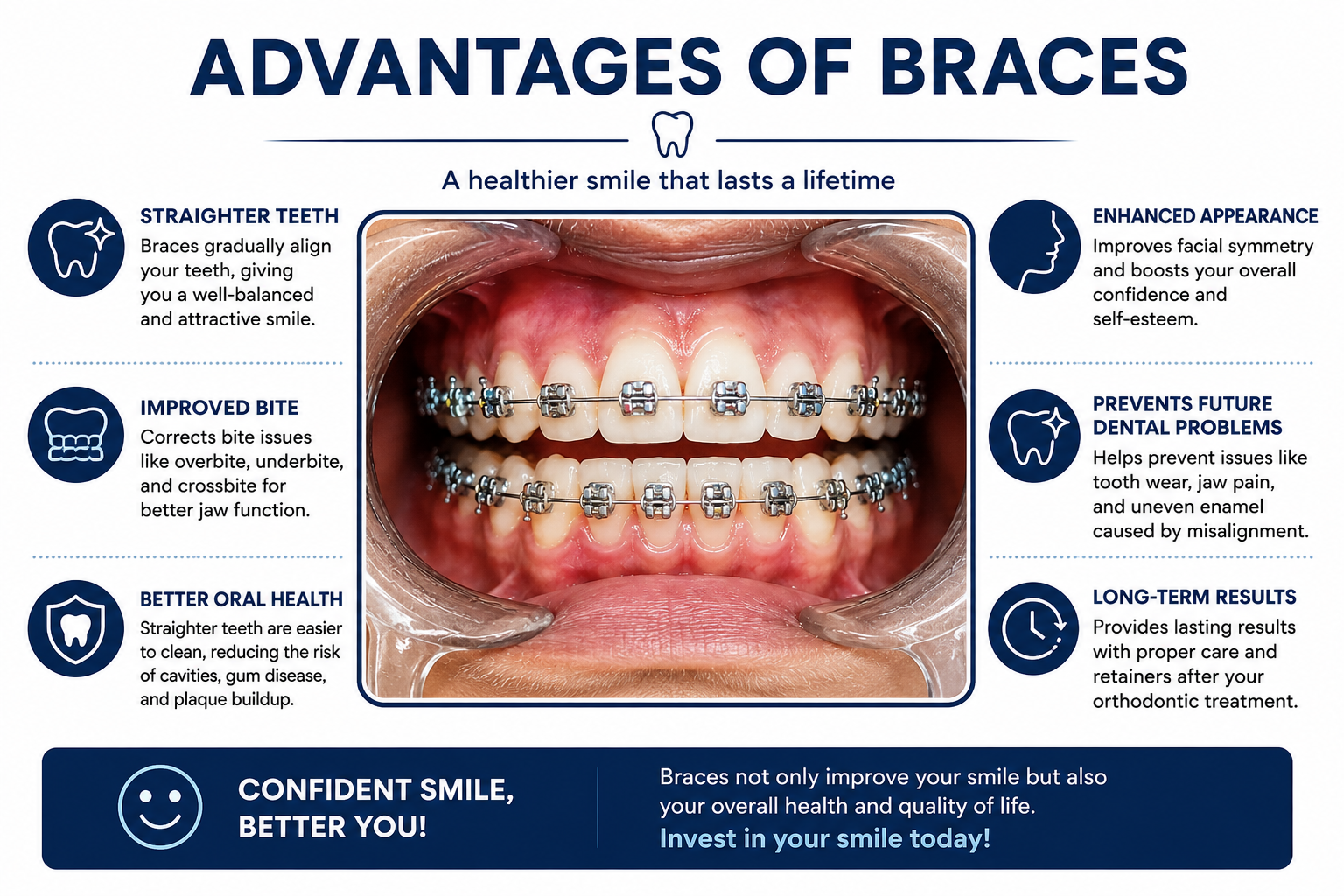
Leaving crooked or crowded teeth untreated can lead to teeth wear, gum disease, and jaw joint strain over time. With high-strength traditional metal braces and subtle clear ceramic options, orthodontic treatment offers a safe, comfortable, and permanent way to achieve a balanced, healthy smile.
Take the first step toward a straighter smile. Complete our scheduling form below to request an orthodontic consultation with Dr. V.R. Mishra.